Wednesday, November 9, 2011

Conclusion of Phase 1 - England

This post is a technical post where the situation on August 1 is used to generate an expeditionary force for phase 2. It is posted in the open in case that anyone is interested, and shouldn't be considered part of the narrative part of the wargame.

Recruitment
Archers: Base size is 12 (~4000).
Base:11 (likely)
Premature departure (-2), small fleet (-2), lots of funds (+1), Gruffyn's leadership(+1)
Target:8, roll:12, MOS:-3. Final size:11 (~2000) Penalty @-1 size per -2 MOS

Spearmen: base size is 10 (~1000).
base:11 (likely)
Premature departure (-2), small fleet (-2), lots of funds (+1), Above target (+1), explicitly included in ferry plan (+1), Gronou's leadership (+1)
target:11, roll:11, MOS:0. Final size 10 (~1000)

Knights and men-at-arm: base size is 12 (~6000).
base:11 (likely)
Premature departure (-2), small fleet (-2), lots of funds (+1), Above target (+1), Exceptional response (+1)
target:10, roll:8, MOS:+2. Final size 13 (~8000)


Horses base size is 13
base:10; shortage(-2), small fleets(-2)
tgt:6, roll:7, MOS:-1. Final size is 12: archers and spearmen on foot as well as ~2000 men-at-arm planning to purchase horses in France.


Human Factors
Discipline
base:10; bad start(-2); selected few(+1), promise of riches(+1), strict discipline(+1)
tgt:11, roll:18, MOS:-7. Abyssmal.

Loyalty
base:10; promise of riches(+1), PoW commands respect(+1), strict discipline(+1), shortages(-2), discipline issues in Plymouth(-2), those selected are the chosen few(+1)
tgt:10, roll:8(archers), 10(spearmen, chosen few during riots makes them a tgt:11), 5(knights).

Funds are staying to plenty:
base:10; surplus(+1), wartax(+1), Plymouth's dammage payout(-2), exceptional measures for drinks (-2)
tgt:8, roll:13, MOS:-5 (plenty to high, high to suitable)


State
Status
Supplies
Order of Battle Archers: ~2000 men (11) Spearmen: ~1000 men (10)
Knights : ~8000 (13)
Overall : ~ 13K (13)


Horses : Location Atlantic, transit.

Activity Sea ferry. Skill levels Maneuver : untrained Operations : untrained Melee : untrained

Human Factors Discipline : Disfunctional (riots).
Loyalty : strong (archers, spearmen), devout (knights).
Glad to leave Plymouth.

The chosen few selected to embark.

Eager to get rich, quick.
food: low
fodder: suitable
wine: very low

Weapons : suitable

bows, strings: high
Armor : suitable


Funds : suitable


The above is the axiom table for this unit.

07/15/55 -- Sir John Griffyn

Situation
Once that you arrive in Plymouth, the town is in a minor state of upheaval: it has ran dry. There are brawls at night, and the Welsh Spearmen have been called by the Prince of Wales to break fights at night. Your unit is billeted in the Northern end of town, where frightened civilians are barricading their houses every night in fear of being invaded... by your men among others.

Mobilization Outlook
Unchanged from July 1, will be updated in Aug 1 (next turn).

  1. Requested forces :  1000 archers (momentum, eager, likely)
  2. Bows, string (shortage of strings, somewhat likely)
  3. Steel headed arrows (acute shortage, unlikely)
  4. Training arrows (plenty!, very likely)
  5. Uniforms, textile and manufacture (recycling old uniforms, unlikely)
  6. Blades (on course, somewhat likely)
  7. Horses (shortage, very unlikely)
  8. Departure within 4 weeks (likely)


Instructions
It is mid-July, your men are trickling in and are getting into trouble as well. You have been ordered by the Prince of Wales to execute 3 troublemakers in a show of tough discipline. You men are confused and angry that they get punished for the shortcoming of the Prince (failure to provide drinks and shortage of other victuals). 

1) Do you carry on the orders? Some units have simply dismissed the culprit after a good beating. 

2) How do you handle the situation for the next two weeks? Things are getting worst every day?

Tuesday, November 8, 2011

08/01/55 - Prince of Wales

An evening in Plymouth with 10,000 of your closest
sober friends.
Personal Situation

The Prince of Wales is currently based in Plymouth, riding through town to quell the unrest unleashed by Plymouth's tavern running out of booze.

Situation
Things have had a turn for the worst in July as the beer shortage triggered brawls throughout the location. Stern discipline was distributed the following morning as ordered. Unfortunately, local loyalties got in the way and discipline was not exacted uniformly. On the following night, the Prince of Wales ordered the Welsh spearmen to break the brawls in town. Desperate attempts to find lodging out of town were unsuccessful, exceptional attempts to source beers from other shires also were futile. The civilians in Plymouth are asking for protection from the Sheriff, but the castle is already overfull with knights and nobles.

There is no headcount at the moment, but there are more knights, baronets, earls and Dukes in Plymouth than anyone could have anticipated. The expeditionary fleet is small, but ready. There are piles and piles of hurdles and gangways on the docks, but not enough ships to retrofit. The food supply is holding on, but barely and largely because the Prince of Wales is getting the archers to hunt during the day so it is easier to clean up the mess from the previous night.


The next update will be in September 1, at the planned departure time, for a final tally of the mobilization.

Mobilization outlook
  1. Troops
    1. Archers (3000) : On target.
    2. Welsh Spearmen (1000) : Will be there as expected.
    3. Knights and retinues (6000) : Overwhelming response.
  2. Victuals
    1. Food : short, due to larger numbers of knights accumulating in Plymouth.
    2. Wine/beer : We're now entering the rioting phase.
    3. Fodder : Plenty harvested and purchased.
  3. Supply
    1. Archery (bows, arrows, strings, heads) : Plenty.
    2. Horses : shortage, not enough for archers.
  4. Navy
    1. Acquire shipping : Slow, but steady.
    2. Staff ships : All arrived ships are ready, not enough ships.
    3. Retrofit ships (gangways, hurdles.) : All arrived ships are ready, not enough ships.
  5. Embarkation
    1. Billet troops : OK for now.
    2. Discipline : Not good, will get worst without drinks.
    3. ETA : Sept 1, 1355 may be delayed by shipping.
  6. Funds
    1. Level : Plenty!
    2. Creditors : The investors have contributed. 
    3. King's funds : Arrived.
    4. War tax : Funds are in.

Instructions
Consider your situation and prepare a list of things to focus on, in the order of importance. Refer to the post on strategy to help formulate your instructions. Here are a few notes:

  1. An almost full size force could sail now if you decides to go this way. 
  2. You may expect desertion to become a factor in the following few weeks as morale is about to plummet.
  3. The sea is good at the moment.
  4. Welsh spearmen have been acting as MP for you, but this makes them even less liked by the Englishmen in the force. 
  5. The archers are the main source of brawlers.
  6. Knights and men-at-arms are forming the bulk of the men on the ground, they are not above reproach here. Nobody likes to wait in an overcrowded place while sober.

Sunday, November 6, 2011

07/01/55 - Prince of Wales


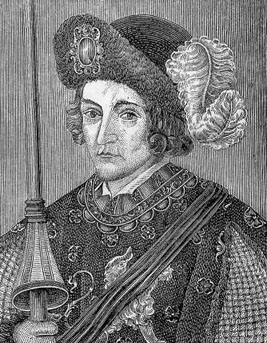
Edward of Woodstock, enjoying a shaved face
for the last time in a long long while.
Personal Situation
The Prince of Wales is currently based in Plymouth, overseeing the retrofitting of the navy and the billeting of the expeditionary force in and around the port town.

Situation
The whole kingdom is droning with activity. Between the Duke of Lancaster in Britanny, the King preparing for Calais and the Prince of Wales for Aquitaine, everyone in England has war on their mind. The nobility and knights are responding in numbers larger than anticipated: baronets are showing up with larger retinues, older knights are accepting indentures when they were not expected to. This is good new except for the fact that the procuring of victuals isn't following the recuitment. Worst, Plymouth has been drank dry and the purveyors can't find enough beer and wine to supply the expeditionary forces. The supply is barely a few days ahead, not a stockpile of a few weeks as we'd prefer. The harvests are good, however, and we have much more fodder than we need for our horses.

As for shipping, our aggressive efforts to impress ships and crew has picked up, but remains slow. We have large piles of gangway and hurdles for retrofitting ships to ferry horses, but most of it is waiting for ships to work with. However, we have a small fleet of ready ships waiting in the harbor and ready to go. There is not enough horses here for our archers, we may need to purchase horses on the continent to solve both the horse and the shipping problem.

A number of civilian tradesmen have answered the call, arrived in Plymouth. However, the shipping situation and the shortage of drinkable stuff (wine, beer), has convinced many to turn back to their residences. Should we pursue the policy of bringing civilians to France?

The next update will be in August 1, at the height of arrivals of soldiers into Plymouth.

Mobilization outlook
  1. Troops
    1. Archers (3000) : On target, momentum lost.
    2. Welsh Spearmen (1000) : Will be there as expected.
    3. Knights and retinues (6000) : Overwhelming response.
  2. Victuals
    1. Food : short, due to larger numbers of knights accumulating in Plymouth.
    2. Wine/beer : Major problem here! We can't go to war sober...
    3. Fodder : Plenty harvested and purchased.
  3. Supply
    1. Archery (bows, arrows, strings, heads) : Plenty.
    2. Horses : shortage, not enough for archers.
  4. Navy
    1. Acquire shipping : Slow, but steady.
    2. Staff ships : All arrived ships are ready, not enough ships.
    3. Retrofit ships (gangways, hurdles.) : All arrived ships are ready, not enough ships.
  5. Embarkation
    1. Billet troops : OK for now.
    2. Discipline : Not good, will get worst without drinks.
    3. ETA : Sept 1, 1355 may be delayed by shipping.
  6. Funds
    1. Level : Plenty!
    2. Creditors : The investors have contributed. 
    3. King's funds : Arrived.
    4. War tax : Incoming (ETA: Aug 1)

Instructions
Consider your situation and prepare a list of things to focus on, in the order of importance. Refer to the post on strategy to help formulate your instructions. Here are a few notes:

  1. The SOP is to sail only once. You may be tempted to ferry some right away, but there is not a lot of troops ready by now to go. It takes 15 days per legs, so a month turnaround time. Only a small force is ready to go, but fodder is ready to go. There could be maybe a 1000 knights and men-at-arms ready to go right away. A small fleet is vulnerable to pirates and French patrols.
  2. Drinks should be available in, of all places, Bordeaux.
  3. You are bathing in money at this point. Finding stuff to buy is the real problem.

08/01/55 -- Gronou ap Griffith

Situation
The travel to Plymouth took place without complications. Much of the men traveled on their own and began to assemble around their leader in Plymouth. There is no official count at the moment, but there should be about a thousand men in the unit, including the stragglers. Of this number, some 100 are knighted and thus forms a core of experienced soldiers. Welsh knights are still considered to be footmen, they have better weapons and armors, are more experienced, but are not comparable to English knights in most cases. The overall skill level of the unit is, however, minimal at the moment. Arriving early was an excellent idea: the billet space in Plymouth is not sufficient for the entire expedition and the first served are getting much better accommodation. Gronou can't help but notice the small number of ships in the port: this doesn't bode well.

The waiting game has begun. Only 1 month before the planned embarkation.

Spearmen from Wales, lead by Gronou ap Griffith

State
Status
Supplies
Order of Battle Speamen : ~1000 men (10) Nobility : ~100 men (7) Location Plymouth, billet

Activity Assembling, training Skill levels Maneuver : untrained Operations : untrained Melee : trained Discipline : suitable Funds : low
Secured early billet in town.

Training maneuvers.


Policing for the Prince of Wales.


Hated by English soldiers.


Breaking up/fueling Street brawls.
Using the Prince of Wales stores for victuals, wine and fodder.

Weapons : low
Armor : low


The above is the axiom table for this unit.


Instructions
Consider your axioms and prepare a list of things to focus on, in the order of importance. Refer to the post on strategy to help formulate your instructions. Here are a few notes:


  1. Low in weapons count as a strike when attempting to complete tasks requiring weapons : battles, skirmish, pillaging, etc. It modulate your skill level in determining the odds of success (by cutting the odds by close to 4)
  2. Low in armor makes the troop lighter and faster, which is a good things for moving around. It is a strike against you in battles and skirmishes. 
  3. Poorly equipped in both armor and weapons, and untrained, your unit is currently useless in battle.
  4. "Operations" refers to non-combats task such as marches, camping, maintaining equipment. 
  5. Low fund counts as a strike against any initiatives requiring funds to complete: you are not broke, but the options are more limited.
  6. The effect of training maneuver will be determined at the end of the month. This is not a new action, but an action that you ordered in the past and for which I assumed that you have carried on since then. 
  7. This entire turn covers the whole month of August. This is probably your last chance to influence the unit's status before it sails to Bordeaux.

Saturday, November 5, 2011

The Fog of War - World

Design Constraints
This post outlines the procedure by which the world will be defined as the game progresses. In a realistic medieval setting, a traveler would not have access to a map to find his/her bearing. Instead, the world is represented by a mental representation of a number of landmarks and how they relate to each other. The notion of dimensions and scale is approximative and subject to the personal experience of individuals. In this game, it will not be possible for a player to know France better than the actor do by simply consulting Google Earth.

World abstraction
The world in the Chevauchee is abstracted as a collection of landmarks. A landmark is either a natural feature, a major town or river. For practical reasons, the entire area covered by one day's march is considered together. Each landmark is abstracted as one area, and connected by an abstract path which may have any number of attributes. The minimal description must contain the following:

  1. Intervening terrain : what kind of terrain exists between two landmarks.
  2. Distance estimate : Either an estimate of the number of days of march, or the label "near", "far" or "very far". The three labels respectively means that the likelihood to get any closer on the following days is "somewhat likely" (10), "unlikely" (8) and "very unlikely" (6). Getting closer to "near" means that the next day's march lead directly to the destination.
From the starting point, the GM first determine whether the next day's walk gets the march any closer to destination. If the next day's march is NOT the destination, a new area is created and populated with random data:
  1. Distance to destination.
  2. Is there a path going forward? 
  3. Is it possible to go left, right?
  4. What is the terrain in this area (population, settlement, wealth, food and fodder, etc). 

The use of scouts allow to determine the properties to all adjacent areas prior to selecting the destination of the next day's march. A move to the left or right will not alter the distance estimate: only a move forward can do this.

As a consequence, it is not possible to know what is the shortest path between point A and B ahead of the march because the path doesn't exist yet (but is almost guaranteed to occur at some point). Opponents may even seek each other without even knowing that they are close to each other (although this is a more complicated story).

Terrain definition


Countryside (rural areas, small unwalled villages and farmlands)

  1. Odds of a left/right path : Somewhat likely
  2. Odds of a path going forward : likely
  3. Population size category (3D6 + 1)
  4. Fortifications (size above 12) : likely
  5. Intervening river: unlikely
Mountain (Broken terrain, low population)

  1. Odds of a left/right path : unlikely
  2. Odds of a path going forward : likely
  3. Population size category (3D6 - 1)
  4. Fortifications (size above 10) : likely
  5. Intervening river: very unlikely
Forest (Broken terrain, low population)

  1. Odds of a left/right path : unlikely
  2. Odds of a path going forward : somewhat likely
  3. Population size category (3D6)
  4. Fortifications (size above 10) : likely
  5. Intervening river : unlikely
A river forces is unlikely to be forded in one area, but all area with a "fortification" has a bridge, which requires access to the fortification to be crossed. When there is an intervening river, only left and right areas are accessible.

to be continued.

How does a turn works during the Mobilization phase?

This post describes how a turn is handled during the mobilization phase.

A post is prepared
This post describes what happen since the last update and what are the outcomes of the instructions provided by the player in the comments of the last post. It also provides a bullet point form summary of the outlook for mobilization for a number of relevant items.

The player controlling this actor is invited to submit instructions.

Processing instructions
Each instruction is considered in the provided order. The first instruction is converted into a TOEM initiative (summary here). An initiative is made of an action or event and an effect. A base probability is assigned, supporting arguments are added as well as counter arguments. These are tallied to come up with a target number between 3 and 18. 3D6 are rolled and the effect is achieved if the sum of the dice is equal or less than the target. There is a bit more to this, but this is mainly how it is done. If the initiative is successful, the GM moves to the next one until there are no initiative or one of them is unsuccessful. Command points are tallied for these initiative and added to the player's score.

Once the player's initiatives are processed, each mobilization outlook item is treated as an automatic initiative. These are modulated by player actions and the outcome of items in the previous turn. The actual setup for the campaign will be determine based on the final state of these outlook items when the fleet is sailing.

Strategies for players
Assume that, if you do nothing, your actor would follow the standard practice of its contemporary. If you don't order anything, actions will be taken that are as much as possible in line with historical decisions. However, this may not be enough to succeed... hopefully not. If your actions are in contradiction with the practices at the time, the GM will let you know and ask for a confirmation. The 14th century is a strange time of our history: some things are rather progressive (no compulsory military service) and some are just strange with respect to our way of thinking (little value to human life and dignity for civilians, no maps, etc.).

  1. Prioritize: all initiative following an unsuccessful initiative are not resolved. This is because the actor just got sucked in a losing activity for the rest of the turn and "lost the initiative". You may want to put trivial orders ahead of less likely events to ensure that they take place.
  2. Point out why something would (or not) work: any arguments put forward to justify what an effect should occur may be used by the GM in determining the target number of an initiative. Likewise, pointing out flaws or unfavourable arguments may be weighted less than if they are not identified by the player. 
  3. Ask for assessments: Before finalizing your orders, you can ask the GM to outline your instructions as TOEM initiative and assess their likelihood. This gives you a chance to reorder the instructions, argue in favour of one or more initiative. Make sure that you OK the instructions eventually so the GM can move forward.